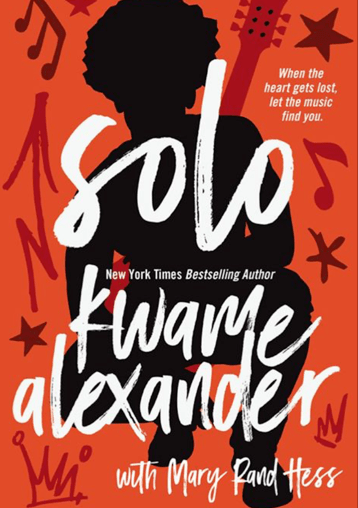
 Solo is Kwame Alexander’s latest release (from Blink YA Books) and features Mary Rand Hess. These amazing authors expertly weave the story of Blade, a teen who would rather not be associated with his famous father, Rutherford Morrison, a washed-up rock star. Blade’s girlfriend, Chapel, is the light in his life of darkness, but her parents forbid her to see Blade amid continued family drama. Blade finds that his life is not as it seems – is it worse? The one connection that the family shares is music – much music. “But not even the songs that flow through Blade’s soul are enough when he’s faced with two unimaginable realities…”
The music that connects Blade, his father, and the other intriguing characters in the book are the web that Alexander and Hess create to lead the reader (and Blade) from Hollywood to West Africa in search of life’s answers. Tracks from Lenny Kravitz, Metallica, U2 ,Van Halen, Aretha Franklin, and more all bring memories to carry the reader (and Blade) into the future. The story is a true hero’s journey through music and time. (Suggestion: Get the audio version!)
What I loved most about Solo is that it is written in Kwame’s famous novel-in-verse style, and adding Mary’s poetic contributions made my heart sing. The book features nostalgic hits and original music by Randy Preston, Alexander’s talented musical friend. The twists, turns, and surprises throughout the book made this a quick read, yet I revisited pages again and again. I downloaded the music to listen to as I traveled with Blade through my third read! I highly recommend Solo for any teen trying to find him/herself in the world, anyone who loves music, or anyone who loves a fantastic story line. (That means “Go Get This Title Now!”) “When the heart gets lost, let the music find you.”



 Reading Teacher Writes